


By the Fiscal Prizm Editorial Team
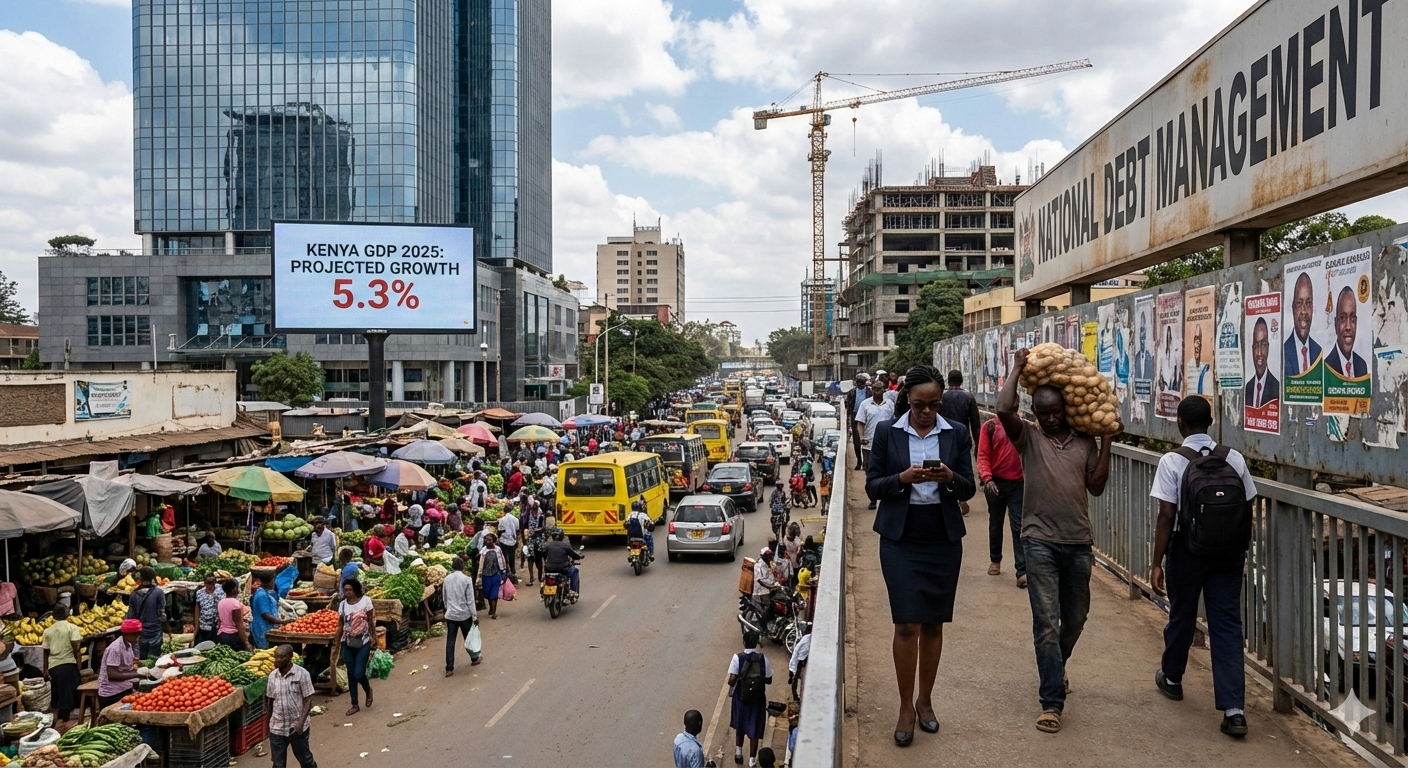
Kenya’s economy is on a recovery path that has fiscal analysts, policymakers, and business leaders cautiously optimistic. According to a newly released report by a parliamentary think-tank, the Institute of Economic Affairs (IEA), the country’s Gross Domestic Product (GDP) is projected to grow by 5.3 per cent this year a notable jump from recent slowdowns that challenged households and investors alike.
But beyond the headline, what does this growth figure actually signal and what should readers of Fiscal Prizm be watching?
GDP Growth: The Headline vs. the Heart
A headline figure like “GDP grows 5.3 %” sounds like good news, and on the surface, it is. But GDP growth is an aggregate number — an umbrella statistic that bundles the output of farms, factories, services, and public works into a single percentage.
What it does not immediately tell us is:
- Where the growth is coming from
- Who feels it in their pocket
- Whether jobs are being created or incomes are rising
- How the cost of living is evolving alongside production
That’s where deeper analysis matters.
What’s Driving Kenya’s Growth Estimate?
The 5.3 per cent growth projection is underpinned by several economic dynamics:
1. Recovery in Key Sectors
Agriculture, manufacturing, and telecommunications have shown resilience particularly in the latter half of the past fiscal year.
2. Trade and External Demand
A rebound in export markets, especially for tea, horticulture, and apparel, has helped widen the trade base.
3. Government Spending
Infrastructure projects — roads, energy, and digital infrastructure contribute to GDP totals even as they increase public debt levels.
4. Rebound in Services
Tourism, transport, and professional services have begun to recover from pandemic-era contractions. While none of these are singularly transformative, combined they paint a picture of broad-based, if modest, growth.
A Note on Comparison: Not All Growth Is Created Equal
A 5.3 per cent GDP growth in isolation sounds strong but context matters:
- Before COVID-19, Kenya routinely posted growth rates above 6 per cent.
- Regional peers sometimes outperform this benchmark.
- Individual sectors can grow while household incomes stagnate.
This disconnect between macro growth and micro reality is a familiar theme in emerging economies and Kenya is no exception. In other words: GDP growth does not automatically mean everyday Kenyans are better off.
What This Means for Fiscal Policy
Kenya’s growth projection arrives at a time when:
- Revenue targets are under pressure
- Fiscal deficit reduction is a priority
- Public debt remains elevated
- Inflation influences consumer prices
Policymakers will be interpreting the GDP figures through the lens of:
- Budget planning and revenue assumptions
- Borrowing and debt sustainability
- Social service expenditures
- Monetary policy (interest rates, credit conditions)
For businesses and investors, this could moderate cautious optimism but also reinforce the importance of data-driven decision making.
Household Impact: Caveat Emptor
At the household level, the implications are less direct:
Jobs
Growth doesn’t guarantee job creation at the pace needed especially for youth employment.
Incomes
Real wage increases depend on productivity, investment, and labour market dynamics.
Prices
Inflation pressures can wipe out the benefit of nominal growth if not checked.
In short, GDP growth can coexist with persistent cost-of-living challenges.
Fiscal Prizm Takeaway
Headline growth is just the beginning; the real story lies in the distribution, impact, and sustainability of that growth. Policymakers should use this projection as a platform, not a finish line. Economic resilience requires stronger tax compliance, careful public spending, structural reforms, and private sector engagement. For individuals and businesses, understanding the nuances will help in budgeting, investment decisions, and long-term planning.
Fiscal Prizm will continue to track GDP trends, dissect policy responses, and translate economic data into insights that matter to you not just to statisticians.
